Rystic launches on YC: test your agents against local copies of Slack, Stripe and Google Drive
By Evan Whitehouse and Zachary Kiihne ·
Test your agent in a simulated world before you let it loose on the real one. We launched Rystic on Launch YC on October 26. This is that post, for readers here.
Rystic gives your agent working copies of the tools it acts on: Slack, Stripe, Google Drive and 14 more. Your tests check what the agent actually did, not just what it said. Each copy keeps its state, runs locally or in CI, and is checked against the real service every day.
Every test job gets its own isolated copy, so tests run in parallel: 50 Stripe test jobs finished in 19 seconds, against 40+ minutes on shared real-API sandboxes. The Stripe deep dive has the full run.
The problem
At a previous job, the first agent we gave write access to GitHub flooded our CI runners with hundreds of pull requests in a few minutes. There was no way to iterate on that agent without running it against production.
When you give an agent write access to a system with real consequences, how do you trust it to behave?
Watch the launch video on YouTube .
How we solve it
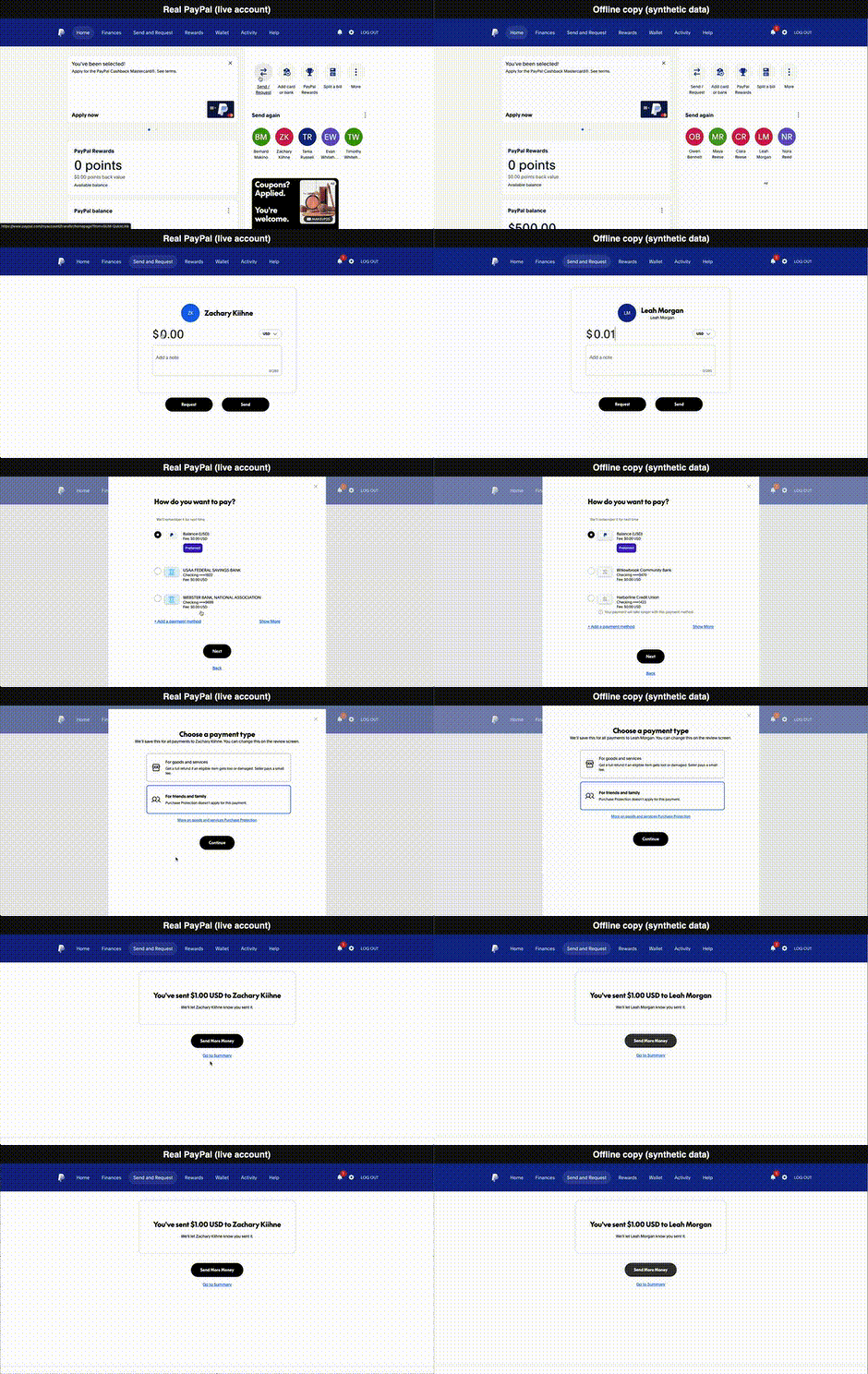
Rystic simulates an API or web app as a lightweight binary. Run it anywhere and it behaves like the real thing. The simulators keep state: delete data, query it, and you get the same error the real service returns.
A simulator also tests what the real API can’t. What happens when latency triples? What if the data feed’s WebSocket drops in the middle of placing an order? Script the failure cases that matter and prove your agent handles them.
Each environment can be seeded with real trace data or synthetic data, so you can check your agent’s actions, and what they change, before you release it.
Why you can trust it
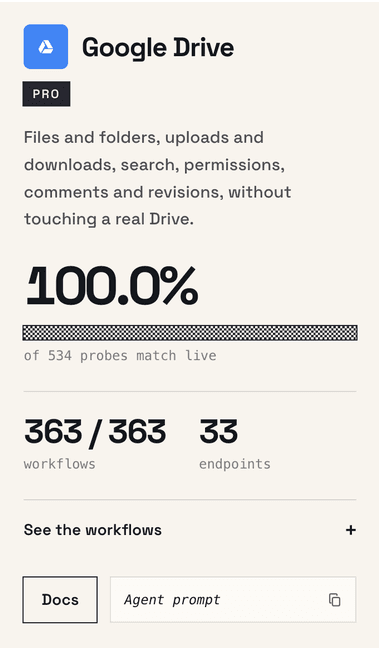
We check every simulator against the real service daily and publish the results. Our Stripe simulator matches Stripe on 99.1% of 1,813 checks, and every known difference is listed on the simulators page.
The team
We met in 2016 as up-and-coming professional Magic: The Gathering players, practiced together and spent more than a year on the same pro team. Evan finished 2018 ranked #2 on the SCG Tour, the largest independent circuit; Zach made the Top 8 at three Pro Tours, the game’s premier events. Then we both moved into software engineering.
Evan graduated with honors in computer science from Columbia and helped build Roblox’s service mesh from zero, serving hundreds of millions of concurrent requests. Zach spent five years at Google, shipping AI integrations in Gmail and Google Docs to billions of people.
We learned to win at Magic by finding the edge cases everyone else missed. We’re building Rystic the same way.
Try it
Building an agent that acts on real systems? Start free. For custom environments, including internal services, write to founders@rystic.ai.